Unvented Cylinder Service in London
The annual unvented cylinder service is a fixed £180, and no VAT is charged. A competent service tests the expansion vessel charge, inlet group, relief valves, tundish, thermostats and element in order, then sorts the findings by urgency so you know what is safe, what to watch and what needs acting on.
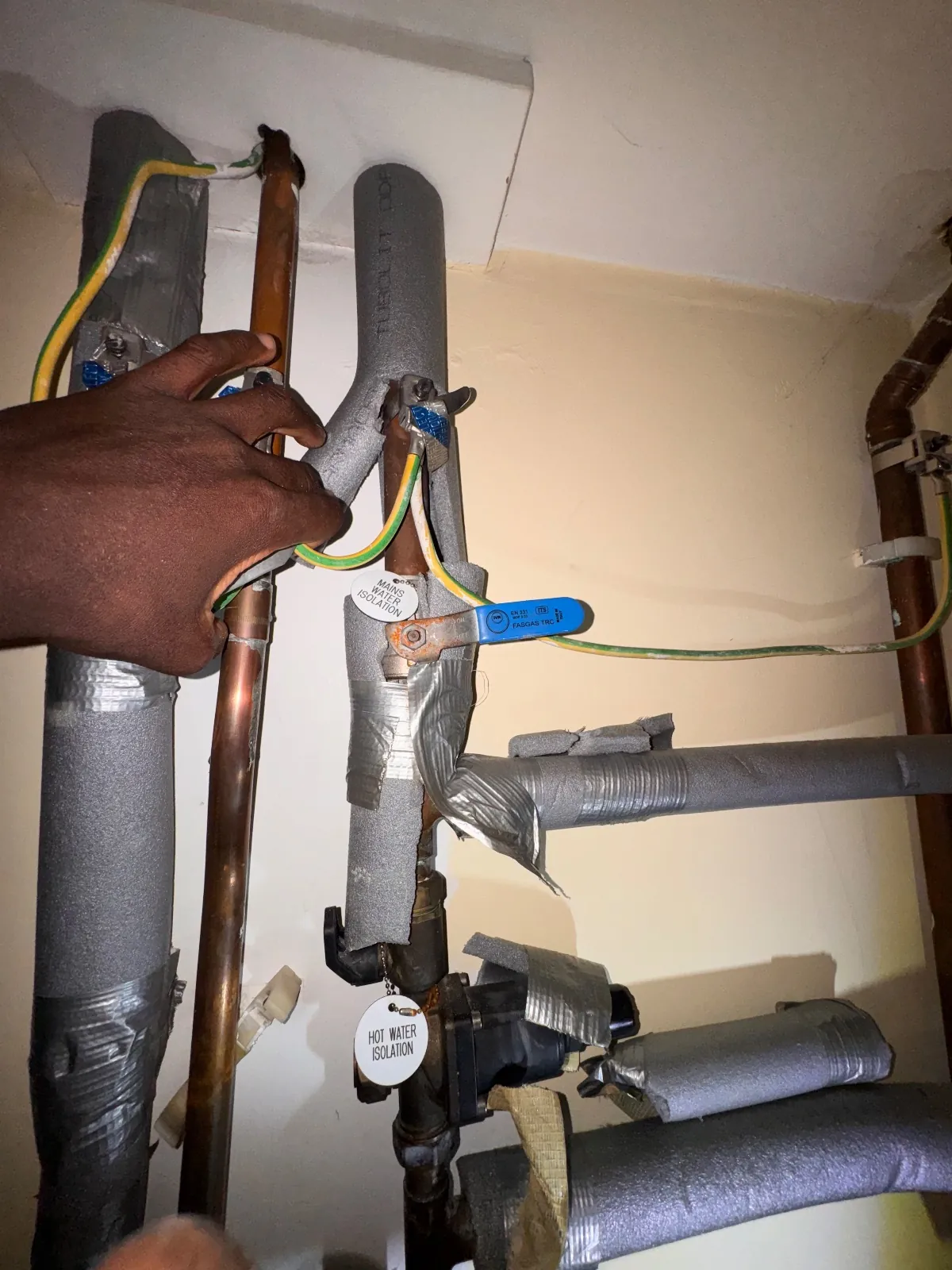
What the visit covers
- Expansion vessel charge tested against the inlet pressure
- Strainer, pressure reducing valve and expansion relief valve in the inlet group
- Temperature and pressure relief valve operated and checked for reseating
- Tundish and discharge pipe checked for scale, flow and visible discharge
- Stopcock, isolation valves, thermostats, element and wiring inspected
Fixed prices
What it costs
- Annual cylinder service
- £180Fixed price
- Cylinder troubleshooting and diagnosis
- No call-out fee.
- £180Fixed price
No VAT is charged
There is no call-out fee
Order of work
Read the data label and the record
Model, capacity, set pressures and any earlier service entries tell the engineer what the cylinder should be doing.
Test the safety side
Relief valves operated and watched through the tundish, discharge route checked, thermal controls confirmed to be in circuit.
Test the pressure side
Inlet pressure, expansion vessel charge, strainer condition and any sign of the expansion valve passing.
Sort the findings by urgency
A useful report separates what is safe, what to watch and what needs acting on now, with the reason and the likely repair for each.
What does an unvented cylinder service cost?
The annual cylinder service is £180. It covers the checks set out on this page, from the data label through to the sorted findings. No VAT is charged, and there is no call-out fee.
If the service shows that the cylinder itself has failed, replacement is a separate job. The cylinder is priced by type, size and your preference, and we recommend the right one. We cover London inside the M25, 24/7.
A typical UK market range for an annual unvented cylinder service is £80 to £150 (BestBuilders, updated August 2026), and the same guide says London work typically sits above it. Two quotes only compare once you know which checks each includes, so the unvented cylinder service cost guide lists what a quote should itemise.
What does a competent annual unvented cylinder service cover?
The table lists what is tested, what a fail looks like and the part involved. The order matters, because the first checks decide whether the later ones are safe to do. The data label comes first. It gives the operating pressure and the expansion valve setting for that model, and every later reading is judged against those, not against a guess.
Safety valves follow. The temperature and pressure relief valve is lifted for a few seconds so water runs through the tundish and away freely, then released to check it reseats without dripping. The water that comes out can be very hot, which is why this is an engineer task. The expansion relief valve in the inlet group gets the same test.
Pressure checks come next. The expansion vessel is tested for air charge with the system depressurised, and the charge has to match the pressure set on the reducing valve. Too low and the expansion valve discharges every heat cycle. Too high and the vessel cannot take the expansion. The strainer in the reducing valve is removed and washed of grit and scale.
Last come the heat side and the plumbing. Thermostats and thermal cut-outs are confirmed in circuit, the element is checked for scale and the terminals for heat marking, and the stopcock and isolation valves are inspected for limescale around the nuts.
| What is tested | What a fail looks like | Part page |
|---|---|---|
| Expansion vessel air charge, with the system depressurised | Charge below the label figure, or water at the air valve, so the vessel cannot absorb expansion | Expansion vessel |
| Inlet group: strainer and pressure reducing valve | Grit or scale in the strainer, outlet pressure above the set figure, weak flow at the taps | Combination valve |
| Expansion relief valve, operated and released | Does not reseat, or weeps on every heat cycle | Combination valve, as above |
| Temperature and pressure relief valve, operated and released | Sticks open, drips after release, or is heavily scaled | Temperature and pressure relief valve |
| Tundish and discharge route | Scale, a blocked or restricted run, or visible discharge between visits | Tundish |
| Cylinder thermostat | Water hotter or colder than the setting, or no switching at all | Cylinder thermostat |
| High-limit thermal cut-out | Tripped, not in circuit, or reset by hand without the cause being found | High-limit cut-out |
| Immersion element and terminals | Scale on the sheath, heat marks at the terminals, or an open or earth-leak reading | Immersion heater element |
| Stopcock, filter and isolation valves | Seized spindles, limescale round nuts, or a slow weep at a joint | No separate part page |
What the findings usually mean
A tundish that drips only while the cylinder heats points to an expansion problem, most often a vessel that has lost its charge. A tundish that drips all the time points to a relief valve that has failed to reseat, or a reducing valve letting through too much pressure. The two are told apart on TPRV and expansion vessel repair.
Heavy limescale on the tundish, a seized stopcock or scale round a valve nut are wear findings. They are not emergencies, but they are the places a slow leak starts, and in older installations they often show up together with damp staining under the cylinder base. A tundish that has been wet for a long time is also a reason to look at the wall and shelf beside it.
A service can find a cylinder that is failing in a way no part will fix. If the shell is weeping or the coil is leaking, a good service report says so and points to a cylinder diagnosis for the repair or replace decision.
How often should an unvented cylinder be serviced?
Follow the manufacturer instructions for your model. Many manufacturers ask for periodic maintenance by a competent person, with extra attention in hard water areas, where the immersion element may need descaling. Warranty terms on some cylinders depend on servicing, so the instruction booklet and warranty card are worth reading before you decide.
No page can give a service frequency for your cylinder. The data label gives the model and the manufacturer, and that is where the answer lives. The question most people actually ask is covered in do hot water cylinders need servicing.
When should an unvented cylinder service not wait?
Book the check sooner if the tundish has started to drip, if the water is hotter than the thermostat setting, if the cylinder is noisy or if the taps surge. None of these needs a panic, but each is a sign a safety or pressure component has stopped doing its job.
A householder can look, but not test. Look at the tundish for a wet trace, listen for banging as the cylinder heats and compare the hot tap temperature with the thermostat. Operating relief valves, checking the vessel and opening covers are all engineer work.
Very hot water or steam from the discharge pipe is an overheating warning. Switch off the heat source at the isolator, keep clear, leave the valves alone and call an engineer.
Questions people ask
Do hot water cylinders need servicing?
Unvented cylinders do. They are pressurised and rely on safety valves, an expansion vessel and thermal cut-outs that wear. Many manufacturers ask for periodic maintenance by a competent person, so check the booklet for your model.
Do vented cylinders need a service?
A vented cylinder has no pressurised safety kit to test, so it needs less. Checking the immersion element, thermostat and valves every few years is sensible, and a leak or scale problem is better found early.
Is servicing needed to keep the warranty?
On many cylinders, yes. Read the warranty card for your model. Missing a service can give the manufacturer a reason to refuse a claim.
Can I check the expansion vessel myself?
No. The vessel has to be tested with the system depressurised and set to the right charge, and the valves around it carry hot, pressurised water. This is engineer work.
What happens if something fails the service?
A good report says what failed, how urgent it is and what the repair involves. A failing cylinder body goes to diagnosis for the repair or replace decision rather than being treated as a part to swap.