Take the cylinder apart
The cylinder explorer is an interactive section drawing of a hot water cylinder. Pick a part to see what it does, how it fails, what to check and which guide to read. Switch between unvented, vented and stratified cylinders, or start from a symptom to see which parts a diagnosis checks first.
The interactive drawing
Or start from what you see
Fig. 1
Section through a cylinder, drawn generic and not to scale.
Pick a part on the drawing, step through them with the arrows, or start from what you see. The answer appears here.
Real parts, photographed
Valves, an element, a thermostat and pipework as they are found on unvented cylinders. Choose a part under a photograph to see it on the drawing.
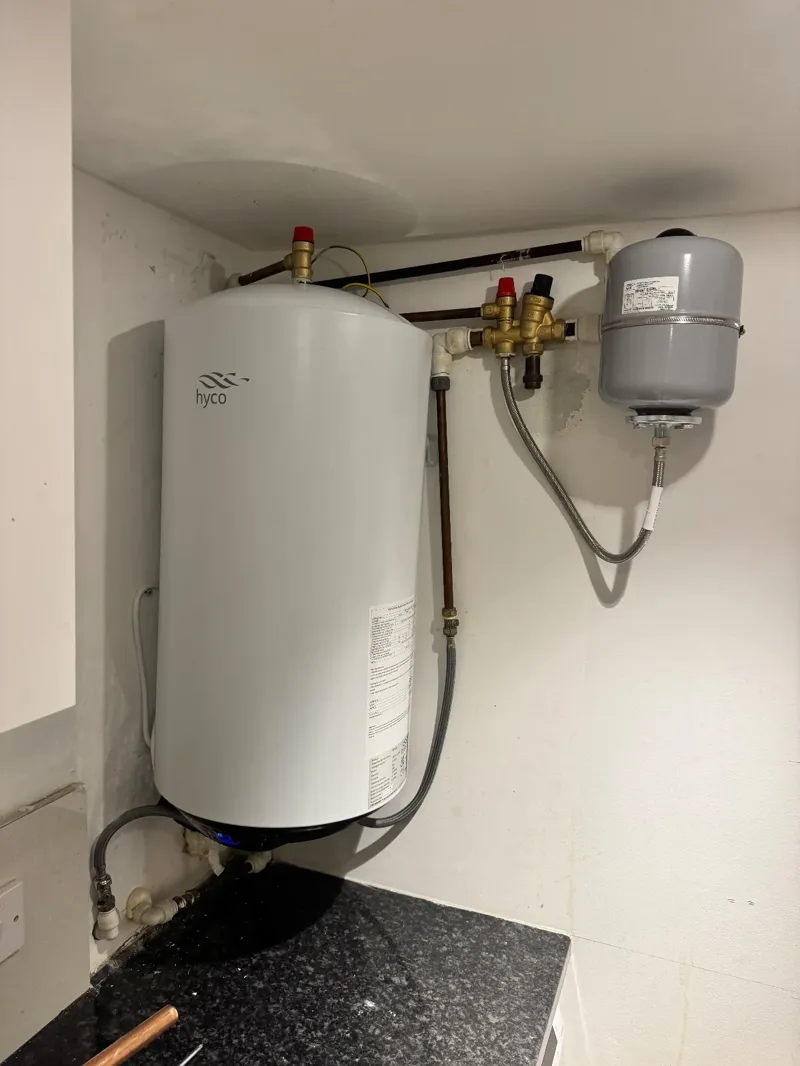
A wall-mounted unvented cylinder with its valve group and expansion vessel. Shows1Inlet group5Expansion vessel
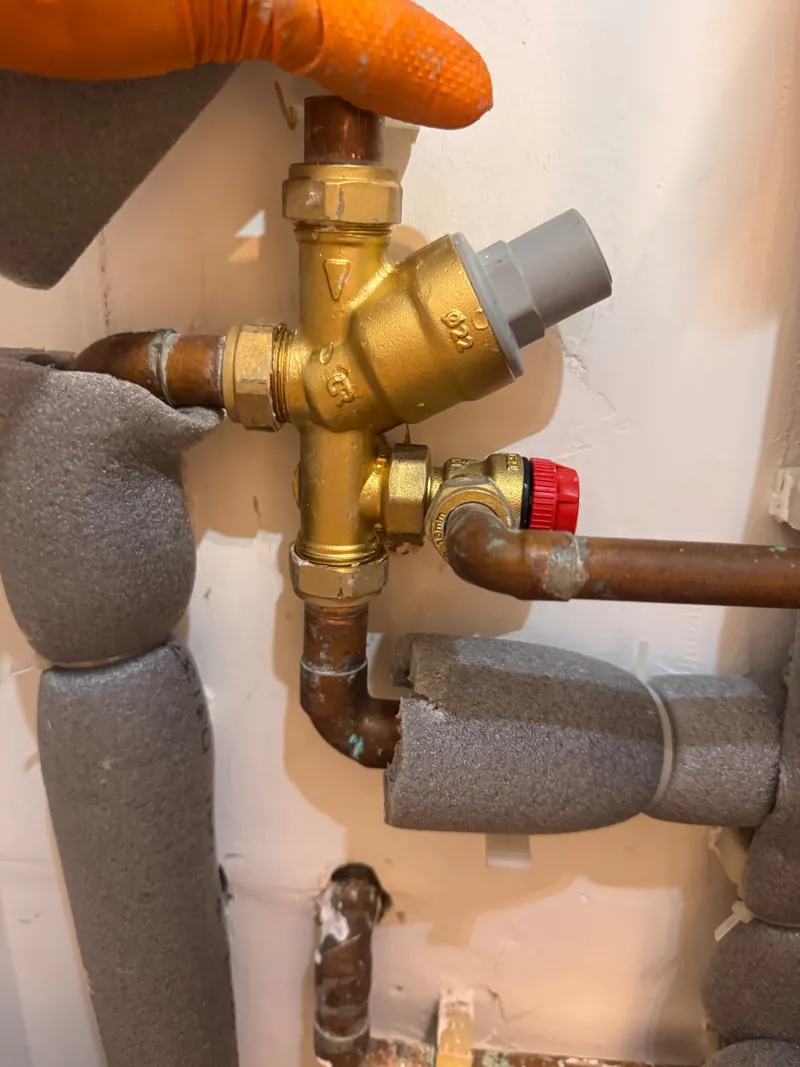
A combination valve group on the incoming supply to an unvented cylinder, with its expansion relief valve on the side. Shows1Inlet group2Expansion relief valve
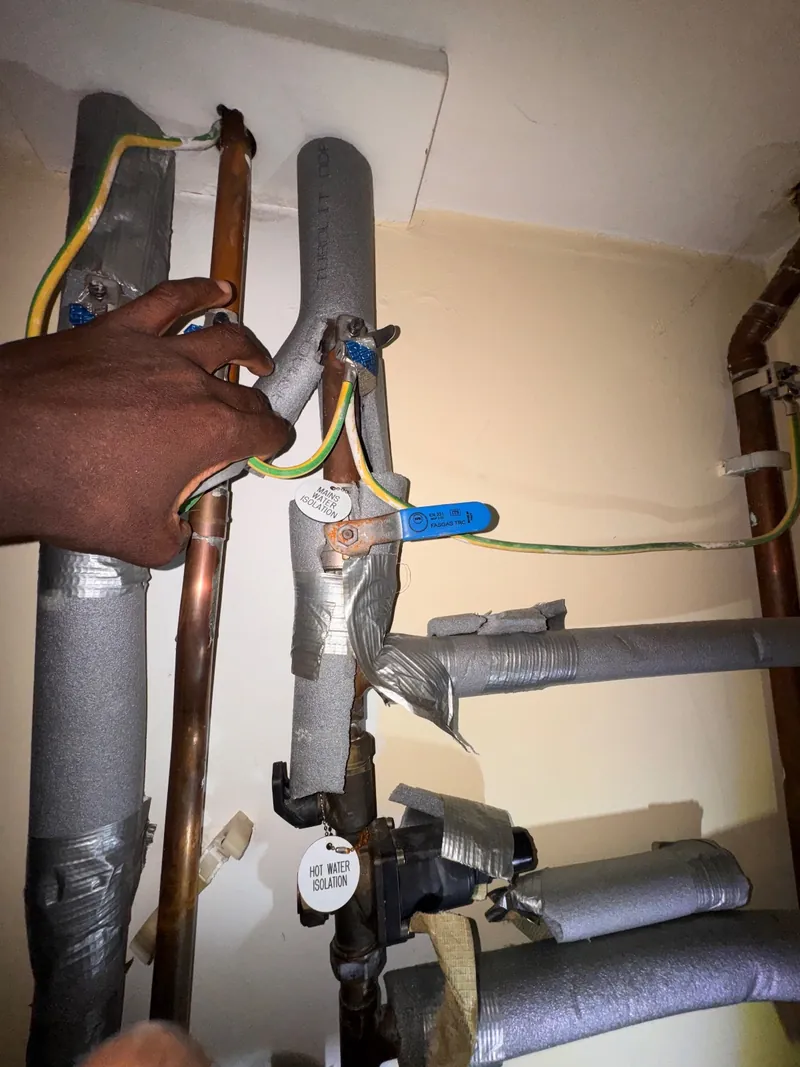
Tagged isolation valves on the pipework at an unvented cylinder. Shows1Inlet group8Hot outlet
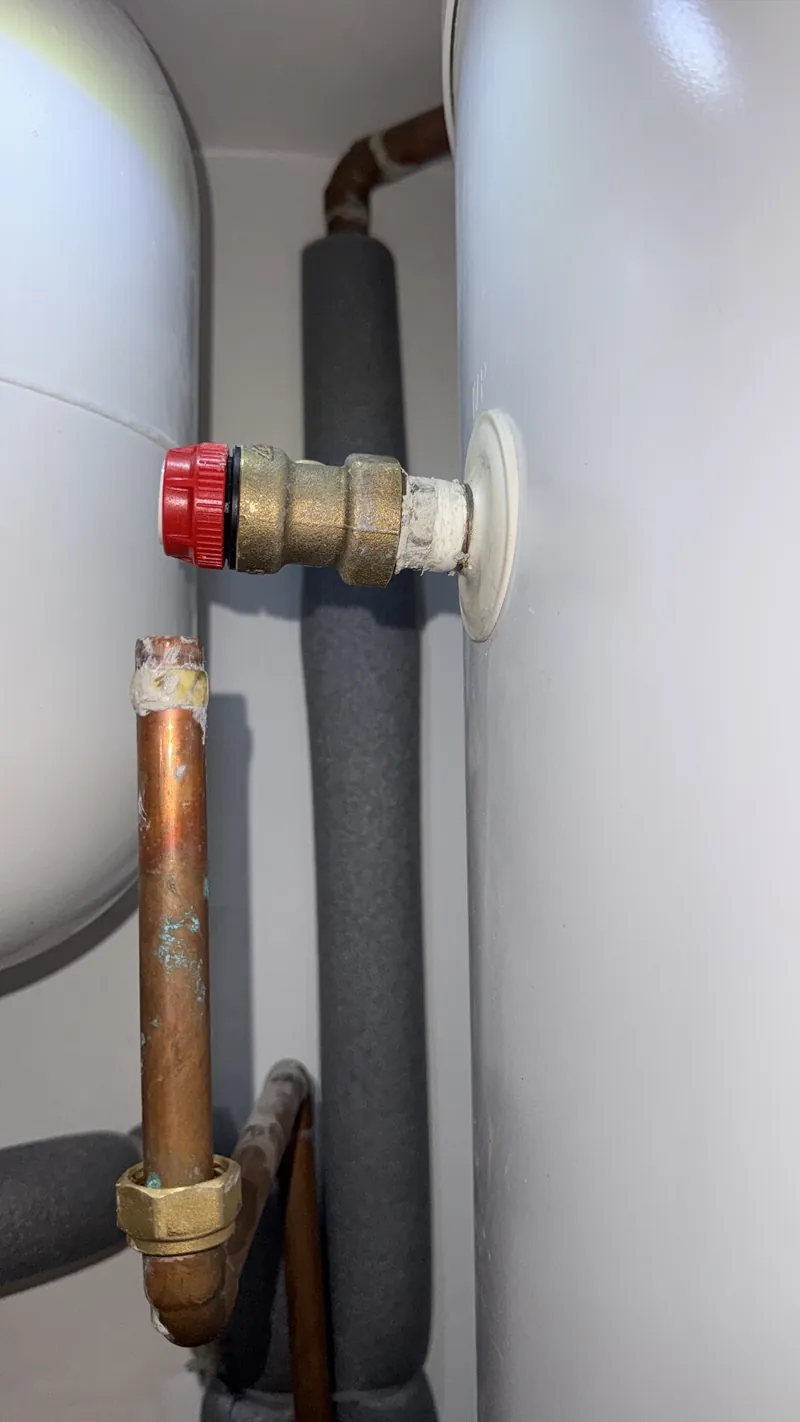
A temperature and pressure relief valve fitted to the side of an unvented cylinder, with the expansion vessel alongside. Shows3Temperature and pressure relief valve5Expansion vessel
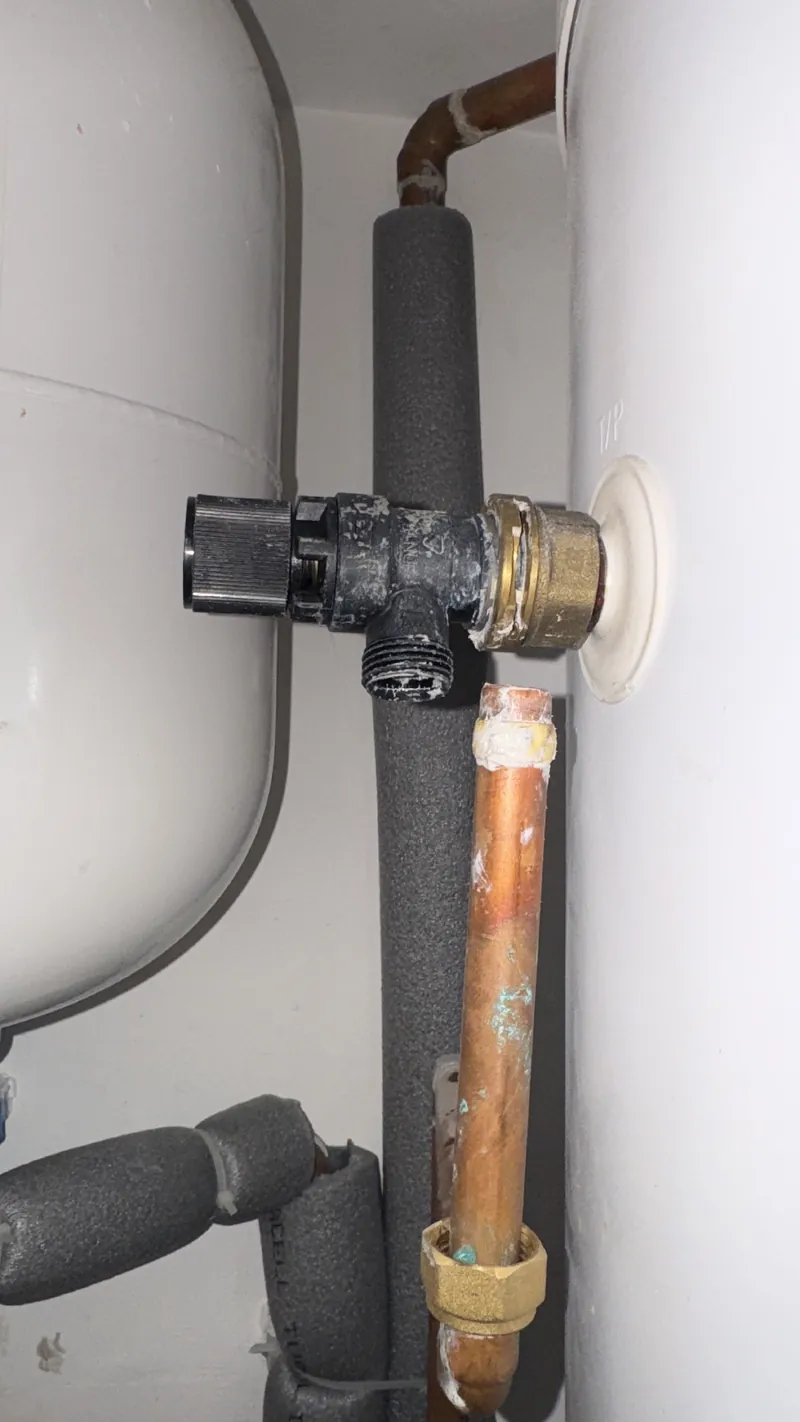
A black plastic relief valve on the side of an unvented cylinder, next to the expansion vessel. Shows3Temperature and pressure relief valve5Expansion vessel
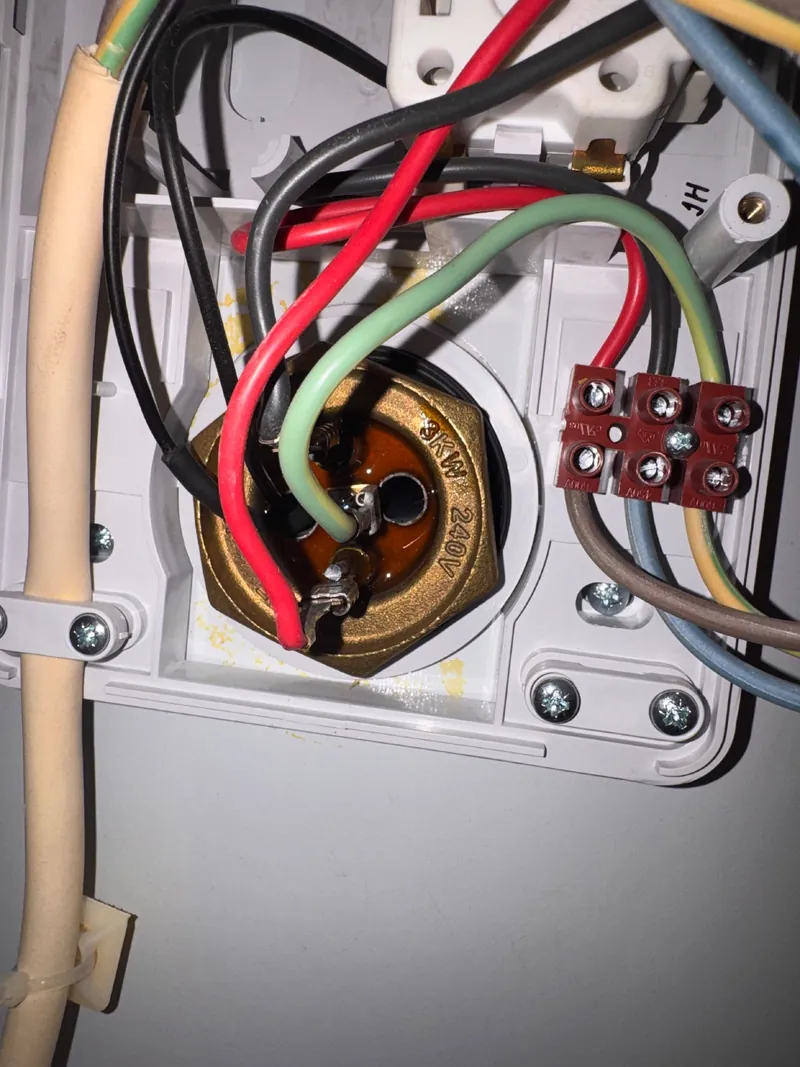
An immersion heater element and its terminal connections on an unvented cylinder. Shows9Immersion element
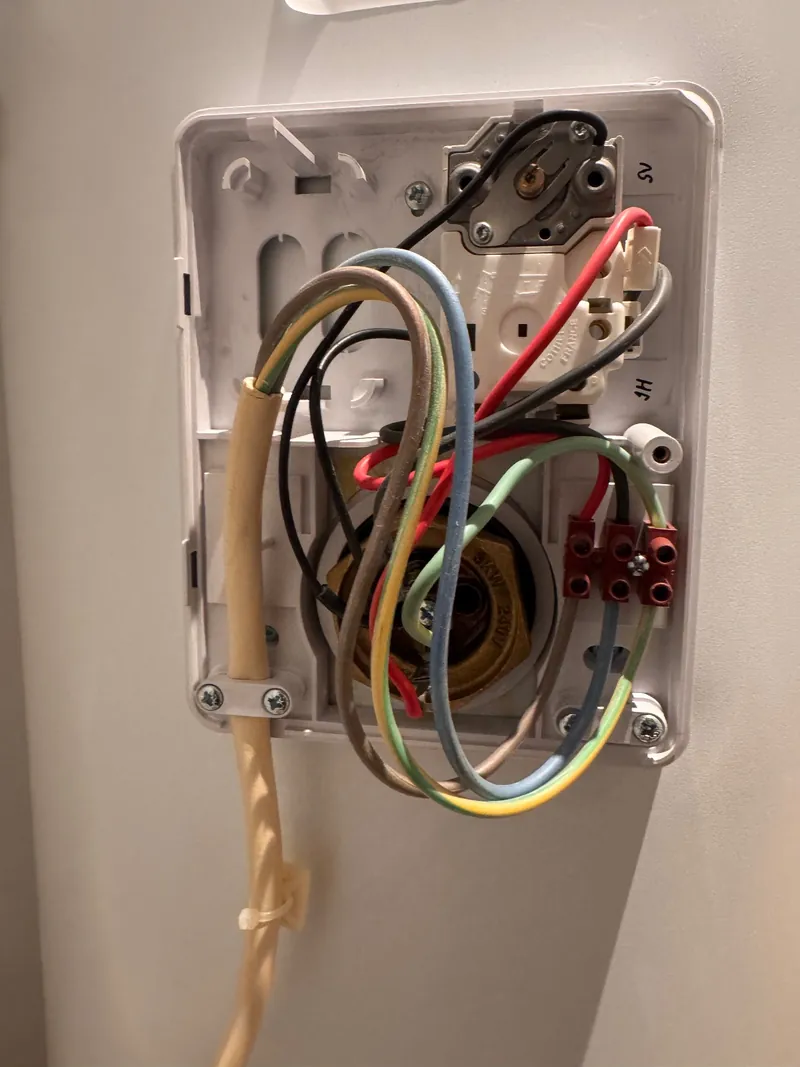
The thermostat and wiring behind an immersion heater cover on a hot water cylinder. Shows10Cylinder thermostat
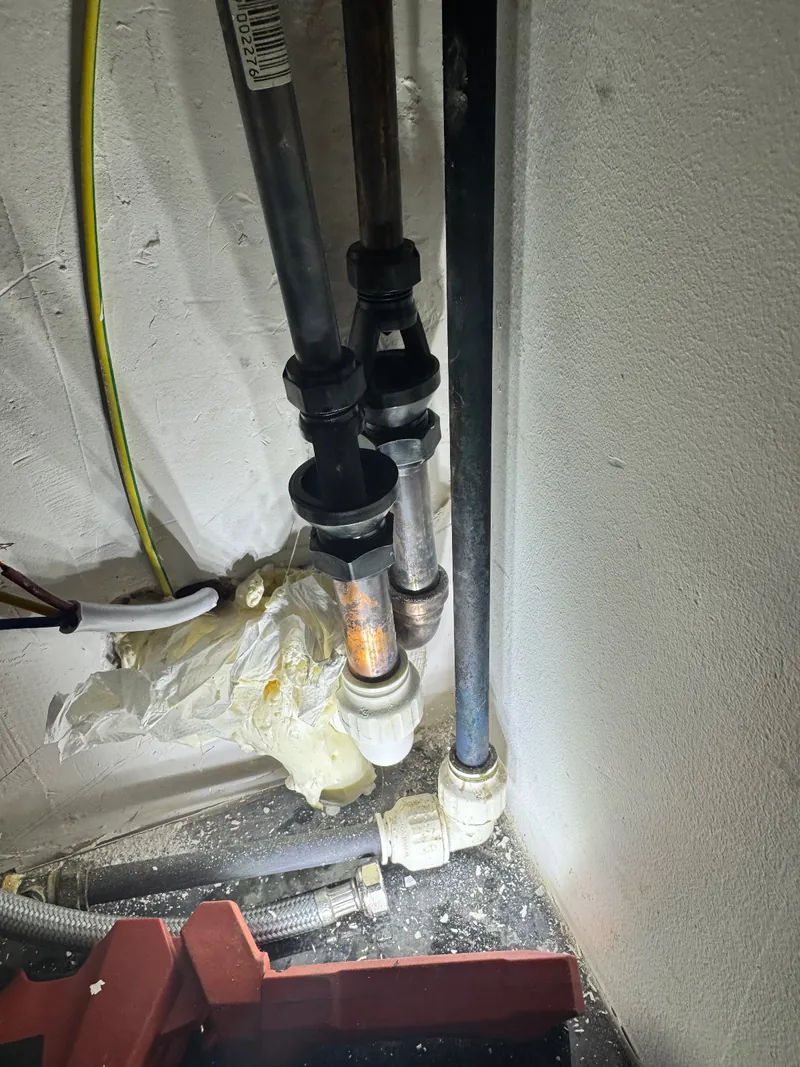
Cold and hot pipework connections at a hot water cylinder position. Shows6Cold inlet8Hot outlet
The fault-finding order
Four checks, always in this order, so repair or replacement rests on what was found and not on a guess. Print it as one A4 sheet to work down beside the cylinder.
London Cylinder Specialist, londoncylinderspecialist.co.uk/cylinder-explorer
Hot water cylinder: fault-finding order
Check 1
Isolation and safety
The heat sources and the water supply are isolated first. On an unvented cylinder the discharge pipework is checked for signs of steam or very hot water before anything is opened.
1 Inlet group
Weak flow at every hot tap with nothing leaking points at a blocked strainer. Pressure creeping up, banging or a weeping expansion relief valve points at the pressure reducing valve.
7 Discharge pipe
An engineer checks that the discharge is visible and clear, that the pipe is the right size and that it falls all the way. It must never be plugged or capped.
Check 2
Stored temperature and controls
The temperature of the stored water against the thermostat settings, the programmer and the motorised valves that tell the cylinder to heat.
10 Cylinder thermostat
Compare the stored water temperature with the thermostat setting, the programmer and the motorised valves that tell the cylinder to heat.
11 High-limit cut-out
Do not simply reset it. A tripped cut-out means something upstream failed to stop the heat sooner, and that is what needs finding.
12 2-port valve
Radiators working while the cylinder stays cold points at a valve stuck shut, or at the thermostat or interlock that should open it.
Check 3
Pressure and expansion devices
On an unvented cylinder: the incoming pressure, the expansion vessel, the pressure and relief valves and the tundish.
5 Expansion vessel
A drip from the tundish while the cylinder heats, which stops as it cools, points at a lost charge. An engineer checks the charge with the vessel isolated and empty.
2 Expansion relief valve
Trace its outlet pipe back from the tundish: a wet outlet on the cold feed points to this valve. A cold drip that never stops is a seat that no longer seals.
3 Temperature and pressure relief valve
A wet outlet on the cylinder points to this valve. A cold drip that never stops is a seat that no longer seals. Steam or very hot water from the discharge: turn off the heat source, keep clear and call an engineer.
4 Tundish
Look at the air gap without touching anything. A drip only while heating points at the expansion vessel or its charge, and a constant drip points at a worn valve seat.
Check 4
Element, coil and valves
The immersion element, the boiler coil feed and the valves that serve them, then the condition of the cylinder itself. That last check decides repair or replacement.
9 Immersion element
Lukewarm water with the boiler off points at the element or its thermostat. An immersion heater is a mains-voltage fitting: switch off at its isolator first and do not open the cover.
13 Heating coil
A boiler that runs while the cylinder stays cold is checked after the valve and the thermostat: the coil feed, then the coil itself.
14 Insulation jacket
Missing or damaged foam shows as heat loss. Wet or stained foam is worth noting, because water can run down inside it before it shows on the floor.
Then decide. A part that has failed on a sound cylinder is a repair. A cylinder that has failed itself is a replacement.
Safety. Scalding water, or steam or very hot water coming from an unvented cylinder? Turn off the heat source, keep clear and call an engineer.
The fourteen parts, drawn one by one
Each part is drawn in section. Where a guide to it is published, the plate opens it.
Show all 14 part plates
- 01TPRV: TPRV Dripping on an Unvented Cylinder
- 02Inlet group
- 03Tundish: Tundish Dripping: What It Is Telling You
- 04Expansion vessel: Waterlogged Expansion Vessel on an Unvented Cylinder
- 05Immersion element: Immersion Heater Not Working: What to Test, in Order
- 06Cylinder thermostat
- 07High-limit cut-out
- 082-port valve
- 09Heating coil
- 10Insulation jacket
- 11Discharge pipe
- 12Airing cupboard: How Long Does It Take to Replace a Hot Water Cylinder?
- 13Scaled element: Immersion Heater Replacement: Test the Element Before You Swap It
- 14Failed element: Immersion Heater Not Working: What to Test, in Order
Read every part of the unvented cylinder as text
The same answers as the panel beside the drawing, in drawing order, for reading without the drawing.
- 1 Inlet group
- Does Isolates, reduces and checks the mains supply before it reaches an unvented cylinder.
- Fails A blocked strainer or a failed pressure-reducing valve shows as low flow or high pressure.
- Check Weak flow at every hot tap with nothing leaking points at a blocked strainer. Pressure creeping up, banging or a weeping expansion relief valve points at the pressure reducing valve.
- 2 Expansion relief valve
- Does Opens if the pressure in the cylinder climbs too high, and sends the water to the tundish.
- Fails Debris or scale can hold it off its seat so it passes water, or the pressure feeding it is too high.
- Check Trace its outlet pipe back from the tundish: a wet outlet on the cold feed points to this valve. A cold drip that never stops is a seat that no longer seals.
- 3 Temperature and pressure relief valve
- Does Opens on excess temperature or pressure and discharges through the tundish to a visible outlet.
- Fails A drip means the cylinder is releasing heat or pressure. The cause has to be found, and the valve must never be blocked.
- Check A wet outlet on the cylinder points to this valve. A cold drip that never stops is a seat that no longer seals. Steam or very hot water from the discharge: turn off the heat source, keep clear and call an engineer.
- 4 Tundish
- Does Puts a visible air gap in the discharge line, so a discharge can be seen before it drains away.
- Fails Water in the tundish points to the valve or the expansion vessel above it, not to the tundish.
- Check Look at the air gap without touching anything. A drip only while heating points at the expansion vessel or its charge, and a constant drip points at a worn valve seat.
- 5 Expansion vessel
- Does Takes up the extra volume as the stored water heats, so the pressure stays in check.
- Fails A lost air charge or a torn diaphragm lets the pressure climb until the relief valve opens.
- Check A drip from the tundish while the cylinder heats, which stops as it cools, points at a lost charge. An engineer checks the charge with the vessel isolated and empty.
- 6 Cold inlet
- Does Feeds mains cold water in at the base of the cylinder, where it is heated from below.
- Fails Poor flow here usually traces back to the inlet group, and scale gathers low in the cylinder.
- Check Weak flow at every hot tap with nothing leaking points back along the cold feed to the strainer and the isolating valve.
- 7 Discharge pipe
- Does Carries any discharge from the tundish down to a safe outlet, falling all the way.
- Fails If it is too small, or does not fall continuously, it cannot carry the flow it is there for.
- Check An engineer checks that the discharge is visible and clear, that the pipe is the right size and that it falls all the way. It must never be plugged or capped.
- 8 Hot outlet
- Does Takes the hottest water from the top of the cylinder to the taps and showers.
- Fails Water that is too hot or too cold at the taps usually traces back to the controls, not to this pipe.
- Check Compare the temperature at the taps with the cylinder thermostat setting before suspecting the pipe.
- 9 Immersion element
- Does An electric element that heats the stored water, as the main source or as a back-up.
- Fails Scale or a burnt-out element leaves the water cold or trips its cut-out.
- Check Lukewarm water with the boiler off points at the element or its thermostat. An immersion heater is a mains-voltage fitting: switch off at its isolator first and do not open the cover.
- 10 Cylinder thermostat
- Does Switches the heat sources on and off to hold the stored temperature.
- Fails If it fails, the cylinder either never calls for heat or keeps heating past its setting.
- Check Compare the stored water temperature with the thermostat setting, the programmer and the motorised valves that tell the cylinder to heat.
- 11 High-limit cut-out
- Does A safety thermostat. It cuts the heat sources if the water gets too hot, and resets by hand.
- Fails A tripped cut-out is a symptom: something upstream failed to stop the heat sooner.
- Check Do not simply reset it. A tripped cut-out means something upstream failed to stop the heat sooner, and that is what needs finding.
- 12 2-port valve
- Does A motorised valve that lets boiler water flow through the coil when the cylinder calls for heat.
- Fails Stuck shut, it leaves the radiators working and the cylinder cold.
- Check Radiators working while the cylinder stays cold points at a valve stuck shut, or at the thermostat or interlock that should open it.
- 13 Heating coil
- Does A coil inside the cylinder that carries boiler heat into the stored water.
- Fails Scale, trapped air or a blockage leave the coil cold while the boiler runs.
- Check A boiler that runs while the cylinder stays cold is checked after the valve and the thermostat: the coil feed, then the coil itself.
- 14 Insulation jacket
- Does The foam around the cylinder shell, which keeps the stored heat in.
- Fails Missing or damaged insulation shows as heat loss, and a wet jacket can point to a leak.
- Check Missing or damaged foam shows as heat loss. Wet or stained foam is worth noting, because water can run down inside it before it shows on the floor.
How the explorer works
Three cylinders, three ways to hold hot water
A vented cylinder is fed from a cold water tank, usually in the loft, so its pressure depends on how high that tank sits. An open vent pipe rises from the top and turns over the tank, which is how expanding water and steam get out. An unvented cylinder is fed straight from the mains and supplies hot water at mains pressure. Because the water is sealed in and heats under pressure, it carries an inlet group, an expansion vessel, a temperature and pressure relief valve and a tundish on a discharge pipe.
A stratified cylinder is an unvented one that heats from the top down. A strip of sensors reads the temperature at many heights, and a controller drives a top-mounted element so that only the hot layer is heated. The boundary between hot water above and cold water below rises and falls with demand.
Why a fixed order
A cylinder fault is rarely where it first shows. Water in the tundish, for example, points to the valve or the expansion vessel above it, not to the tundish. So a diagnosis runs in four steps, always in the same order: isolation and safety, stored temperature and controls, pressure and expansion devices, then the element, coil and valves. The fault-finding order on this page sets them out so they can be printed.
Using the drawing
Select a part, or move between parts with the arrow keys, and the panel beside the drawing says what the part does, how it fails and what to check, with a link to the matching guide or service once it is published. A symptom lights the parts a diagnosis would check first, in order. Each view numbers its own parts, so the same part can carry a different number in each one.
Vented or unvented: a quick test
A lidded tank in the loft with a float valve and an overflow pipe, and an open vent pipe over it, means vented. A valve group on the cold feed, an expansion vessel, a tundish and a discharge pipe mean unvented. A mix of signs can mean a thermal store, so photograph it and ask.
What the explorer cannot do
The drawings are generic, not a specific make, and no drawing can see the cylinder in your home. The explorer narrows the field; it does not name the fault. Look, photograph and note, but do not adjust, cap, plug or replace any valve, vessel, thermostat or cut-out. An immersion heater is a mains-voltage fitting, so switch off at its isolator first and do not open the cover. If an unvented cylinder discharges steam or very hot water, turn off the heat source, keep clear and call an engineer.
When it is not clear which part has failed, diagnosis is a fixed £180. No VAT is charged. There is no call-out fee. What it finds decides whether the repair is a part on a sound cylinder or the cylinder itself needs replacing.
Questions about cylinders and the explorer
What is the difference between a vented, an unvented and a stratified cylinder?
A vented cylinder is fed from a cold water tank and has an open vent pipe. An unvented cylinder is fed from the mains and carries an expansion vessel, relief valves and a tundish. A stratified cylinder heats a hot layer at the top and grows it downwards.
How can I tell which type of cylinder I have?
Look in the loft first. A cold water tank with a float valve and an overflow pipe, and an open vent pipe above the cylinder, means vented. A valve group on the cold feed, an expansion vessel and a tundish mean unvented.
Which valve is the TPRV and which is the expansion relief valve?
The temperature and pressure relief valve is fitted directly on the cylinder, usually near the top. The expansion relief valve is part of the valve group on the cold feed. Both usually run to the same tundish, so trace each outlet pipe back.
Why does the heating work but not the hot water?
Heating and hot water are separate circuits that share a heat source. When the radiators warm up but the cylinder does not, the usual suspects are the cylinder thermostat, a motorised valve, a failed immersion heater or a fault with the coil.
Can the explorer tell me what is wrong with my cylinder?
It narrows the field, but it cannot see your cylinder. A diagnosis finds the fault in a fixed order before any part is replaced, and it is a fixed £180. There is no call-out fee. No VAT is charged.